
The Hidden Cost of Executive Distraction: Why Delegation Is an Operational Strategy
Most companies track revenue, burn rate, and growth velocity.
Few track executive distraction.
For founders and senior leaders, time is not evenly priced. An hour of executive attention is often one of the most expensive resources inside an organization. Yet many companies unintentionally allocate that resource to tasks that do not require executive-level decision-making.
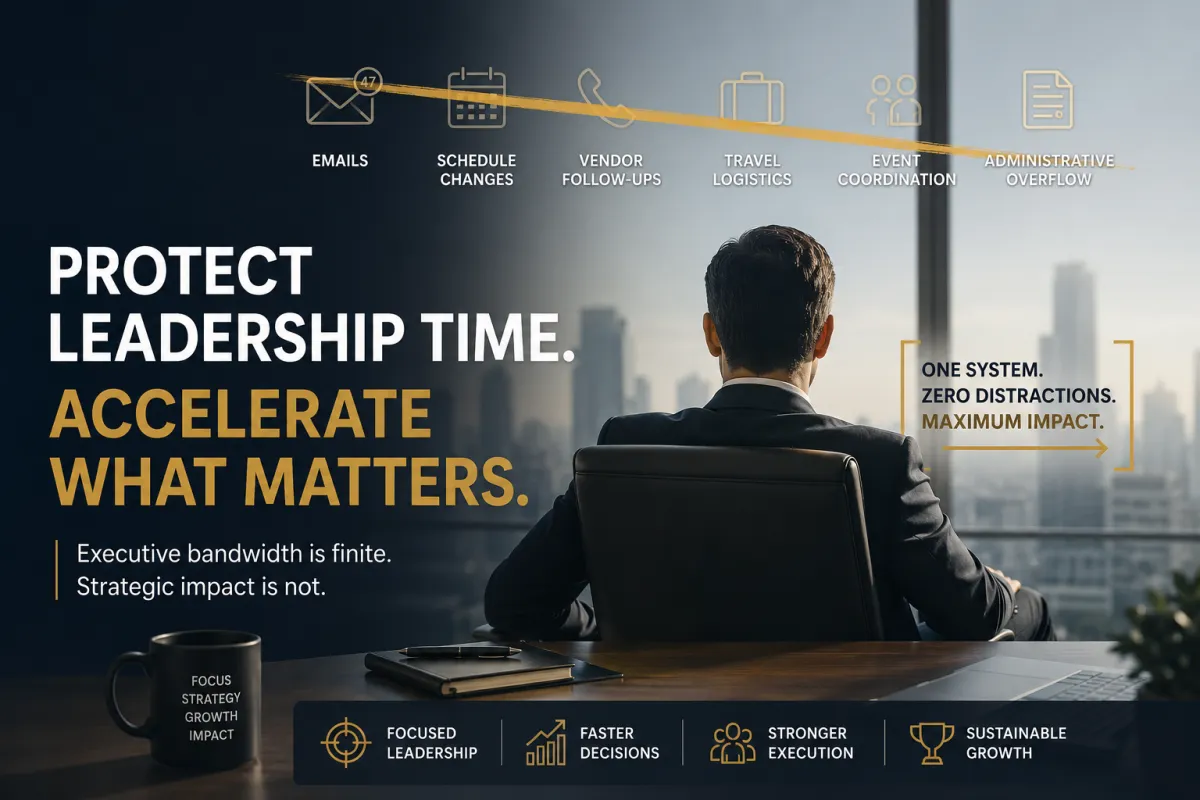
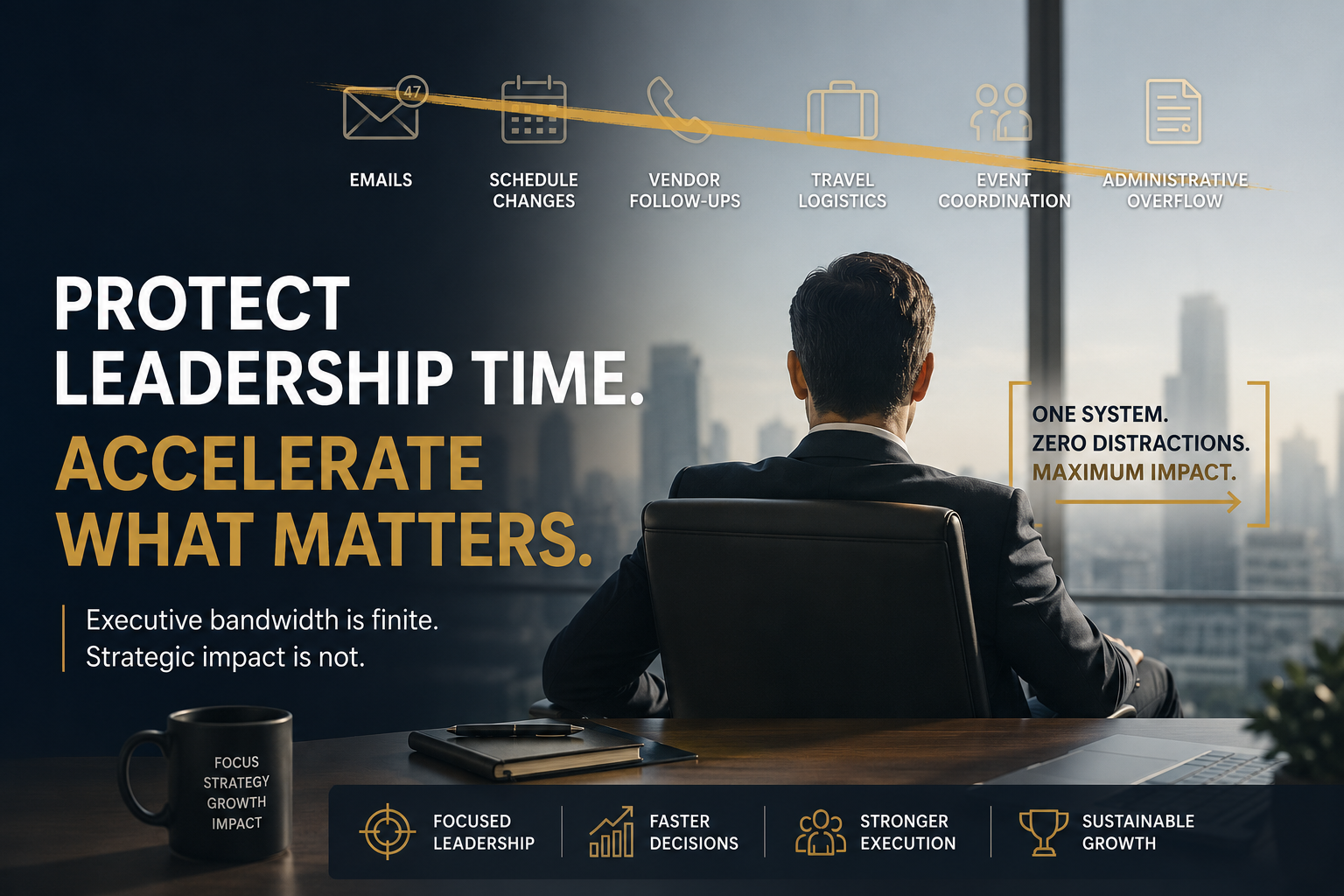
Scheduling adjustments.
Vendor follow-ups.
Travel logistics.
Event coordination.
Administrative overflow.
Personal obligations that spill into work hours.
Individually, these tasks seem minor. Collectively, they erode focus and slow strategic momentum.
Executive Attention Is a Finite Asset
Research in cognitive science shows that decision fatigue reduces the quality of judgment over time. Leaders making dozens of micro-decisions outside core strategic work often experience diminished clarity on high-impact decisions.
The cost isn’t just time.
It’s:
Slower decision cycles
Reduced creative thinking
Delayed execution
Leadership burnout
Organizational bottlenecks
When executives are operating at partial bandwidth, the organization feels it.
The False Economy of “Handling It Internally”
Many companies assume these responsibilities should be absorbed by:
In-house executive assistants
Operations managers
Or the executive themselves
But traditional support roles often become overwhelmed by fragmented requests and reactive workflows.
The result:
Constant follow-ups
Missed details
Informal task tracking
Dependency on memory instead of systems
This creates operational drag.
Delegation without structure is still noise.
Concierge-Style Support as Infrastructure
Modern executive concierge services operate differently. They function as structured operational layers designed to centralize and manage non-core responsibilities through one coordinated system.Rather than scattering tasks across emails, texts, and internal staff, leaders route logistical and administrative friction into a dedicated support channel.
This model provides:
Centralized task capture
Clear delegation pathways
Proactive follow-through
Reduced internal disruption
At Almost Anything Inc., our Executive Corporate Concierge model was designed specifically to protect leadership bandwidth and eliminate fragmented workflows that slow organizations down.
This is not about outsourcing responsibility. It’s about designing operational clarity.
The ROI of Protected Leadership Time
When executive time is redirected toward:
Strategy
Growth
Partnerships
High-level hiring
Investor communication
The financial return is measurable.
Even recovering 5–10 hours per week of leadership bandwidth can materially impact:
Deal velocity
Revenue execution
Strategic initiatives
Team morale
Operational excellence is not just about systems. It’s about ensuring the right people are focused on the right work.
Delegation as a Competitive Advantage
High-performing organizations understand that leadership attention is a premium asset.
The question is not:
“Can the executive handle this?”
The better question is:
“Should they?”
Structured delegation is not indulgence. It is operational strategy.
Organizations that treat executive bandwidth as infrastructure — rather than an unlimited resource — move faster, think clearer, and execute more decisively.
Learn more about our Executive Corporate Concierge model HERE.