

Discover the Best Property Management CRM for Your Needs
Comprehensive Property Management Services: Expert Solutions for Residential and Commercial Needs

Property management is the organized process of overseeing real estate assets to protect value, maximize income, and reduce owner risk through operations, maintenance, and administration. This article explains how property managers execute day-to-day operations, leverage software and data to improve efficiency, and apply specialized approaches for residential and commercial portfolios so owners can make informed decisions. Readers will learn the core responsibilities of property managers, the role of property management software and CRM functionality, the operational differences between residential and commercial management, owner-facing benefits of rental management services, and the latest technology trends reshaping the sector. Common owner pain points, time constraints, inconsistent maintenance, and lack of transparent reporting, are addressed with practical solutions and examples that demonstrate measurable outcomes. After the overview of core concepts, we explore luxury and personalized property concierge models that combine technical capability with discreet, on-demand service for high-achieving owners.
Almost Anything Inc. exists to provide elite, on-demand personal assistance that simplifies life for high-achieving individuals, delivering luxury-level service with unmatched discretion, speed, and care.
What Are the Key Responsibilities of a Property Manager?
A property manager is responsible for protecting the owner's asset by coordinating operations, enforcing leases, and ensuring ongoing maintenance to preserve income and capital value. Managers execute tenant relations, rent collection, lease compliance, maintenance oversight, inspections, and financial reporting to reduce vacancy risk and liability. They also cultivate vendor relationships and implement preventative maintenance schedules so properties run efficiently and unexpected capital expenses are minimized. Efficient management creates predictable cash flow and preserves long-term property condition, which leads into how residential and commercial oversight differ in scale and regulation.
Property managers oversee assets differently depending on property type and tenant structure, which affects staffing and vendor coordination. The next subsection compares oversight models for residential versus commercial portfolios.
How Do Property Managers Oversee Residential and Commercial Properties?

Residential oversight typically focuses on frequent tenant interactions, turnover management, and consumer-protection compliance, while commercial oversight emphasizes lease negotiation, CAM reconciliation, and long-term tenant retention. Managers of residential buildings prioritize rapid response to tenant requests, routine safety inspections, and streamlined rent collection systems to reduce vacancy periods and tenant disputes. Commercial property managers coordinate multiple stakeholders such as tenants, brokers, and service contractors, and they monitor building systems and compliance to protect income from longer-term leases. These operational differences influence technology choices and reporting cadence, leading into the specific tasks included in rental property management services.
What Tasks Are Included in Rental Property Management Services?
Rental property management bundles tenant acquisition, screening, leasing, rent collection, maintenance coordination, and financial reporting into a single operational workflow that relieves owners of day-to-day oversight. Tenant screening involves identity verification, credit and background checks, and rental history validation to lower eviction risk and preserve rental income. Maintenance management tracks tickets, schedules preventative service, and leverages vetted vendors to reduce costs and response times, while accounting modules produce monthly statements and tax-ready reports. Clear communication pathways and documented processes improve owner visibility and set expectations for how issues are resolved, which leads naturally to software tools that enable these functions.
Rental property management services deliver tactical advantages through scale, standardized processes, and data-driven oversight that directly benefit owners, which we will quantify in the owner-benefits section.
How Does Property Management Software Enhance Efficiency?
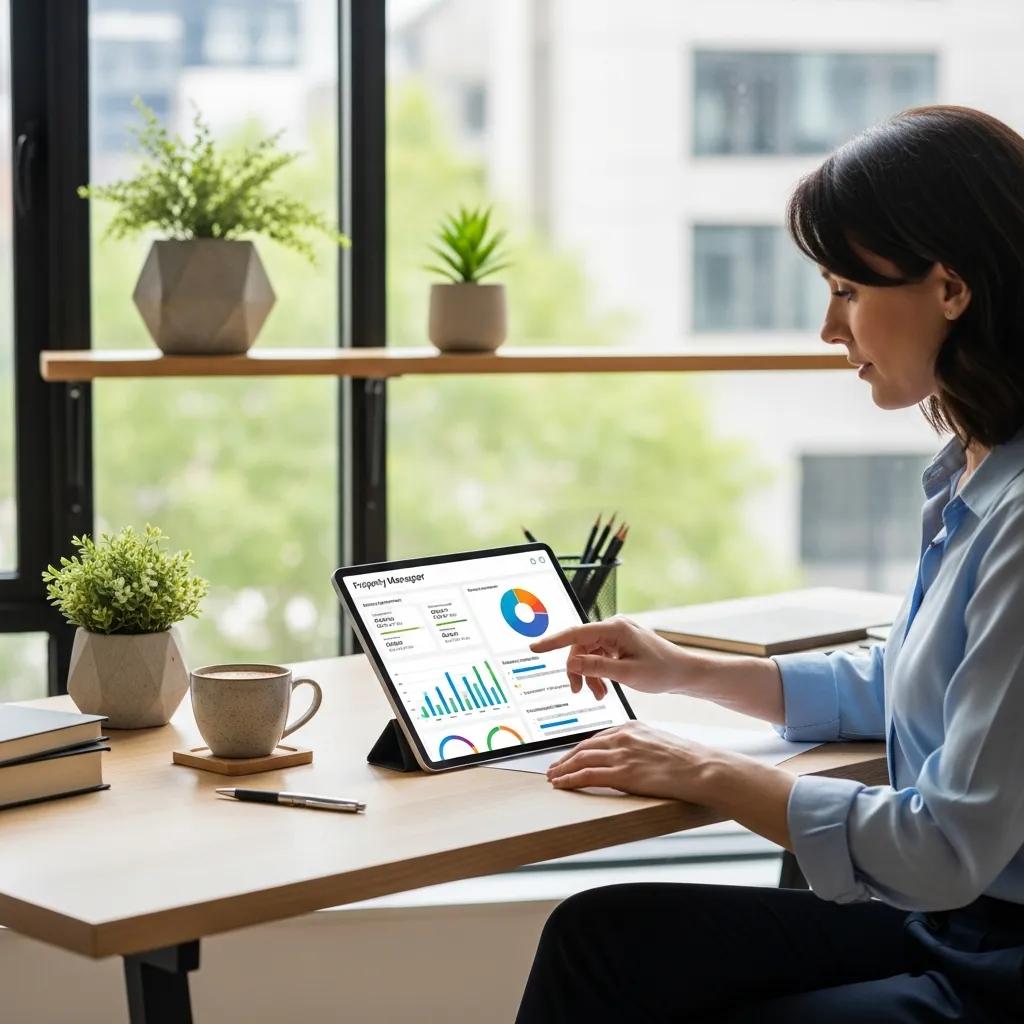
Property management software centralizes tenant and property data, automates routine workflows, and enables transparent reporting, which reduces manual effort and improves decision speed. CRM modules maintain tenant histories and communication logs that lower dispute resolution time and improve retention, while accounting features automate rent processing and reconcile ledgers for accurate financial control. Maintenance ticketing systems route work orders to vetted vendors and provide time-stamped resolution histories that reduce downtime and long-term repair costs. These software capabilities combine to deliver measurable efficiency gains and support both residential and commercial portfolios, and the table below compares core software modules by purpose and owner impact.
Property management software modules mapped to their operational benefits:

This comparison highlights how modular platforms streamline common tasks and free managers to focus on strategic portfolio optimization, and the following subsection details features to prioritize when selecting a CRM for property management.
What Features Should You Look for in Property Management Software?
When choosing property management software prioritize CRM capabilities, accounting integration, maintenance workflows, and security controls to protect tenant and owner data. A strong CRM should include a tenant portal for payments and communication, automated reminders for lease milestones, and configurable templates for consistent processes. Accounting modules need bank reconciliation, expense tracking, and owner-statement generation to support transparent financial oversight and tax preparedness. Security features such as role-based access, encryption, and audit logs safeguard sensitive client information, especially for owners who require discretion and privacy; these priorities naturally segue to how software specifically improves rent collection and communication.
Choosing the right feature set reduces manual tasks and the probability of errors, which directly improves rent collection metrics and tenant satisfaction as explained next.
How Does Software Improve Rent Collection and Tenant Communication?
Property software improves rent collection by enabling online payments, automated reminders, and integrated late-fee policies that reduce delinquencies and speed up cash flow. Tenant communication becomes centralized through portals and messaging logs, eliminating fragmented conversations across email, phone, and text and reducing dispute resolution time. Measurable KPIs include lower days-sales-outstanding, fewer late payments, and improved occupancy rates due to faster onboarding and clearer tenant expectations. These improvements rely on disciplined process implementation and vendor onboarding, which ties into the services managers provide to owners and the quantifiable benefits they deliver.
To show specific software-to-outcome relationships, the next section applies an entity-attribute-value table mapping modules to automation levels and tenant-facing features.

This EAV table clarifies how each module contributes to operational efficiency and owner ROI, and the next H2 contrasts residential and commercial management models built on such systems.
What Are the Differences Between Residential and Commercial Property Management?
Residential and commercial property management share core goals—asset preservation and income optimization, but differ in lease structure, stakeholder complexity, and regulatory frameworks that shape operational priorities. Residential managers contend with higher turnover, consumer protection laws, and frequent tenant communication, while commercial managers handle longer-term leases, CAM calculations, and multi-tenant coordination that require more specialized financial modeling. These distinctions influence vendor networks, inspection frequency, and performance KPIs such as net operating income versus tenant satisfaction metrics. Understanding these differences helps owners select targeted management solutions tailored to their asset type, and the following subsections break down operational distinctions and commercial challenges.
Comparing residential and commercial management clarifies why different staffing, reporting cadence, and contractual controls are necessary, which leads into a short comparison of management approaches.
How Are Residential Properties Managed Differently from Commercial Spaces?
Residential management emphasizes move-in/move-out workflows, rapid maintenance response, and regulatory compliance tied to tenant protections that reduce legal exposure and support resident satisfaction. Tenant acquisition focuses on marketing and screening to minimize vacancy and turnover costs, while rent collection systems prioritize user-friendly online payments and automated reminders to maintain steady cash flow. Inspections are scheduled regularly to identify wear-and-tear early, which preserves condition and controls capital expenditures over time. These operational practices differ from commercial models in cadence and complexity, and they set the stage for unique commercial challenges discussed next.
Residential practices prioritize tenant experience and operational speed to maintain occupancy and community standards, which contrasts with commercial risk allocation strategies.
What Unique Challenges Do Commercial Property Managers Face?
Commercial managers navigate complex lease negotiations, tenant mix optimization, and building systems maintenance that can require specialized engineering and contract management to protect revenue streams. Challenges include reconciling CAM charges, ensuring HVAC and life-safety systems meet regulatory standards, and managing relationships among brokers, corporate tenants, and service providers. Mitigation strategies involve rigorous lease auditing, preventive facilities maintenance, and scenario planning for tenant turnover to preserve net operating income. These case-driven approaches reveal why owners of commercial buildings often demand deeper technical expertise and strategic portfolio planning.
Understanding these distinct management paradigms clarifies the different vendor networks and reporting demands that owners should expect, which leads directly into the owner-benefit analysis of rental property management services.
How Can Rental Property Management Services Benefit Property Owners?
Professional rental management delivers time savings, risk reduction, and improved financial performance by standardizing tenant screening, maintenance, and reporting processes. Owners gain access to vetted vendor networks, automated rent collection, and regular financial statements that clarify monthly performance and long-term capital planning. By outsourcing tenant relations and compliance tasks, owners reduce legal exposure and free personal time while potentially increasing net returns through lower vacancy and improved rent roll health. For high-achieving property owners seeking elevated service levels, on-demand concierge offerings can further reduce friction and preserve privacy while handling estate-level needs.
To illustrate how services map to owner outcomes, the table below shows common service components with attributes like time saved, cost impact, and privacy controls.

This EAV breakdown demonstrates how core services translate into owner benefits, and the next subsections describe tenant screening advantages and maintenance/reporting workflows that simplify oversight.
What Are the Advantages of Professional Tenant Screening and Lease Management?
Professional screening reduces vacancy risk and eviction probability by verifying identity, income, and rental history before lease execution, which preserves rental income and lowers legal exposure. Lease management standardizes terms, enforces rules consistently, and includes digital storage of agreements so disputes are easier to resolve and documentation is audit-ready. Combined, screening and precise lease controls improve tenant quality and protect owner interests while reducing time spent on contentious late-stage collection efforts. These controls also support scalable portfolio management and feed into routine financial reporting workflows that owners rely upon.
Robust screening and lease protocols create predictability in cash flow and tenant behavior, which ties directly into maintenance strategies and reporting cadence explained next.
How Does Maintenance and Financial Reporting Simplify Property Oversight?
Maintenance workflows use ticketing systems, priority triage, and preventive schedules to reduce emergency repairs and extend asset life, which lowers total ownership cost over time. Financial reporting consolidates income, expenses, and capital expenditures into clear owner statements and dashboards that support tax preparation and portfolio decision-making. Regular maintenance logs and transparent financials reduce surprises and enable proactive capital planning, giving owners confidence in their investment performance. These operational efficiencies also make it easier to incorporate luxury concierge requests or special privacy controls for high-net-worth owners.
For owners considering elevated service levels, tailored concierge and on-demand assistance can be integrated into these operational frameworks to further reduce owner involvement and preserve discretion.
Almost Anything Inc. exists to provide elite, on-demand personal assistance that simplifies life for high-achieving individuals, delivering luxury-level service with unmatched discretion, speed, and care.
This branded positioning illustrates how concierge-level property management complements the operational benefits above by adding privacy-first service and rapid-response coordination that reduces owner workload and friction.
What Are the Latest Trends in Property Management Technology?
Current technology trends, AI, smart-home integration, and cloud-based platforms, are streamlining operations by automating routine tasks, enabling predictive maintenance, and supporting secure remote management. AI automates tenant communication, triages maintenance tickets, and analyzes financial trends to flag anomalies, while smart-home systems provide remote access, energy management, and security monitoring that increase tenant satisfaction and reduce operating costs. Cloud software centralizes data across properties, offers role-based access for owners and managers, and enables real-time dashboards for portfolio oversight. These trends deliver tangible outcomes like faster issue resolution and lower long-term expenses, and the next paragraphs link these technical capabilities to how luxury providers operationalize speed and discretion.
Technical capabilities underpinning modern property management can be summarized in a short mapping table that connects technology to outcomes.

This table demonstrates the direct path from technology to operational benefit, and the following short branded tie-in explains how technical speed and discretion support luxury service promises.
Implementing these technologies enables rapid, private responses to owner and tenant needs; for example, encrypted tenant portals and role-based dashboards preserve confidentiality while AI-driven workflows accelerate issue resolution. Almost Anything Inc. exists to provide elite, on-demand personal assistance that simplifies life for high-achieving individuals—delivering luxury-level service with unmatched discretion, speed, and care. By combining AI, cloud platforms, and smart-home integrations, luxury property management can meet expectations for both technical excellence and white-glove service.
How Is AI and Smart Home Integration Transforming Property Management?
AI enhances tenant experience through chatbots and automated communications that resolve common inquiries outside business hours, reducing manual message handling and improving perceived responsiveness. Predictive maintenance algorithms analyze sensor and work-order data to schedule repairs before failures occur, which lowers emergency repair costs and tenant disruption. Smart-home integrations offer remote lock control, energy optimization, and secured access logs that increase safety and reduce utility waste, creating measurable tenant satisfaction gains. These capabilities change operational workflows and enable luxury-level responsiveness that supports discretion and convenience for owners.
AI and smart-home tools increase uptime and tenant comfort, which naturally leads to discussion of cloud-based architectures that consolidate these capabilities.
An AI-Driven Decision Support System for Property Management to Enhance Operational Efficiency
Internet of Things (IoT) devices and sensors gather real-time data. This data is utilized in conjunction with Long Short-Term Memory (LSTM) models to forecast energy consumption patterns, optimize resource allocation, and analyze resident feedback for service enhancements. Objective: This research endeavors to develop an AI-powered decision support system for property management, aiming to improve both management efficiency and service quality. Methodology: The research encompasses several phases: data acquisition from IoT devices, data cleaning and preprocessing, development of predictive models (e.g., LSTM networks), and system optimization. Performance is assessed using key performance indicators such as task completion rates, maintenance request resolution times, and resident satisfaction scores. Cross-validation and model performance metrics, including Mean Absolute Error (MAE) and Mean Squared Error (MSE), are employed to evaluate model accuracy. Findings: Empirical results demonstrate substantial improvements in property management metrics, including task completion... AI-Driven Property Management Decision Support System Using LSTM Networks for Energy Optimization, 2025
What Role Does Cloud-Based Software Play in Modern Property Operations?
Cloud-based platforms centralize property data, provide secure remote dashboards for owners and managers, and enable integrations with accounting, CRM, and IoT systems to create cohesive operational ecosystems. Centralization improves collaboration across teams and vendors, simplifies backups and auditing, and scales easily as portfolios grow without heavy local IT investment. For high-net-worth owners, cloud solutions must include strict privacy controls, encryption, and granular permissions to maintain confidentiality while enabling real-time oversight. These operational benefits justify investment in enterprise-grade cloud platforms and prepare organizations to adopt new AI-driven capabilities.
Having covered technology and trends, the final major section focuses on why luxury, personalized property management is valuable for high-achieving individuals and what exclusive services they can expect.
Why Choose Luxury and Personalized Property Management Services?
Luxury and personalized property management blends technical rigor with concierge-level attention to reduce owner involvement, protect privacy, and ensure assets receive proactive care that preserves lifestyle and investment value. These services prioritize vetted staffing, privacy-first communication, bespoke vendor sourcing, and rapid on-demand responses to address both planned and emergent needs. Owners receive curated reporting and white-glove coordination for lifestyle events, guest stays, and estate-level inspections that conventional providers often overlook. The next subsection explains how discreet operational protocols and on-demand assistance simplify life for time-constrained, privacy-conscious owners.
Almost Anything Inc. exists to provide elite, on-demand personal assistance that simplifies life for high-achieving individuals—delivering luxury-level service with unmatched discretion, speed, and care. Placing that sentence here as core messaging underscores the brand promise while the following content expands on operational examples and exclusive benefits.
How Does Discreet and On-Demand Assistance Simplify Life for High-Achieving Property Owners?
Discreet assistance uses vetted staff, NDAs, secure communication channels, and minimal footprint operations to protect owner privacy while resolving issues quickly and professionally. On-demand coordination arranges urgent maintenance, guest services, and estate logistics without requiring owner presence, saving time and reducing stress for those with demanding schedules. An anonymized scenario: a last-minute guest arrival is managed end-to-end—cleaning, key exchange, and arrival logistics—without exposing owner contact details or requiring owner intervention. These operational protocols provide peace of mind and continuity of service, which points to the specific exclusive benefits offered by luxury property concierge services.
Discretion and responsiveness reduce owner involvement and make it feasible to manage multiple properties across jurisdictions without personal oversight, which leads to a list of exclusive benefits and their value.
Commercial Property Management: Accounting and Financial Reporting Standards
In large and developed property markets such as the UK, institutional investors do not manage their portfolios directly but rather outsource management operations to specialized firms. Property accounting is one of the most critical services, as it provides essential financial information on property performance to owners and users (tenants). In the UK, property accounting is regulated by three primary accounting standards to ensure unified and transparent reporting of costs and revenues: the Royal Institution of Chartered Surveyors (RICS) standards, Generally Accepted Accounting Principles (GAAP), and International Financial Reporting Standards (IFRS). The RICS standard dictates the content and principles for reporting to owners and tenants. Capita is one of the largest management firms in the British property market, offering various management services to investors, including accounting, as presented in this paper. These highly specialized management services are virtually unknown in the Polish property market, and there is no local standardization for property accounting. As the institutional investment market grows and develops in Poland, the demand for specialized property management services will increase, necessitating the adoption or development of local reporting standards. Property accounting in commercial property management, M Zięba, 2014
What Exclusive Benefits Do Luxury Property Concierge Services Offer?
Luxury property concierge offerings extend beyond standard management to include estate inspections, bespoke vendor sourcing, lifestyle coordination, and prioritized response protocols that protect both asset and schedule. These services provide owners with a single point of contact for complex needs, access to premium vendor networks, tailored preventive maintenance plans, and privacy-first handling of sensitive matters. Owners benefit from reduced administrative burden, faster issue resolution, and elevated experiences for guests and tenants that preserve property value and lifestyle continuity. The practical ROI includes saved personal time, lower emergency spend, and consistent presentation of the property for long-term value.
Key exclusive concierge benefits can be summarized in a short list and lead naturally to concluding operational thoughts about selecting a provider.
Bespoke Vendor Sourcing: Connects owners to vetted premium service providers for specialized projects.
Priority Response Protocols: Ensures urgent issues receive immediate attention and expedited resolution.
Integrated Lifestyle Coordination: Manages guest services, event logistics, and personal property needs discreetly.
These benefits reduce owner workload and protect privacy, guiding owners to evaluate providers based on discretion, speed, and care.
Property Management Software for Residential Operations
Mail merge functionalities within property management software facilitated time savings by enabling The use of property management software in residential property management, D Halvitigala, 2014
Operational Excellence: Choose providers with documented processes and technology integrations that support transparency and efficiency.
Privacy Controls: Prioritize managers offering role-based access, NDAs, and vetted personnel to protect sensitive information.
Concierge Capabilities: Verify concierge scope and vendor networks to ensure lifestyle needs will be met with discretion.
Selecting a provider that combines technical capability with concierge-level attention delivers both asset protection and lifestyle convenience, concluding the article with a clear framework for owner decision-making.